
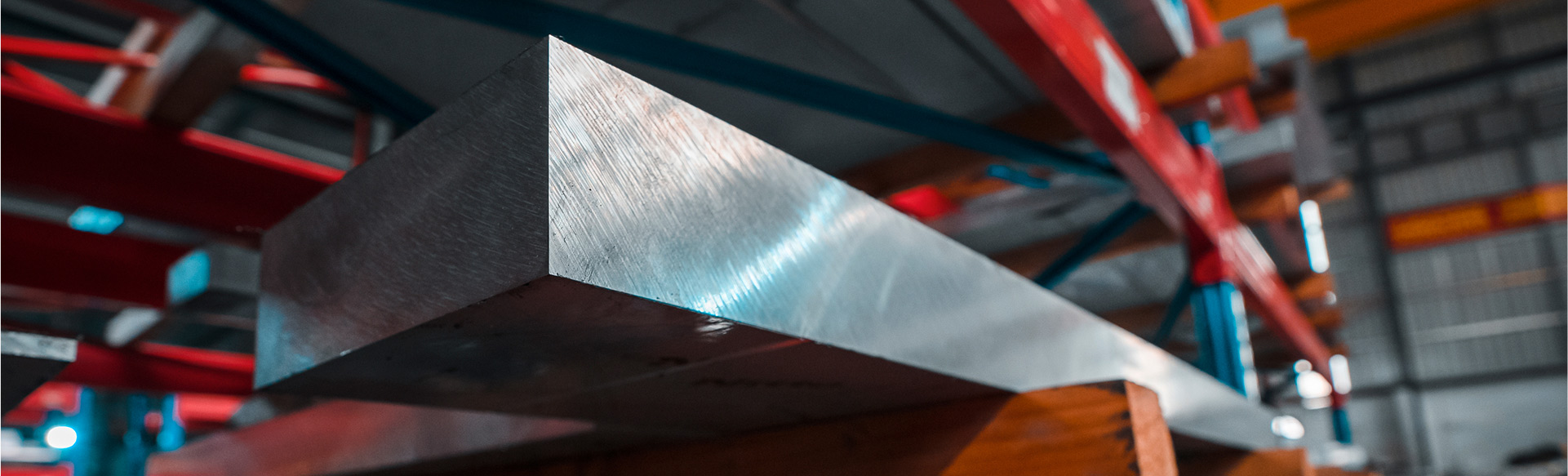
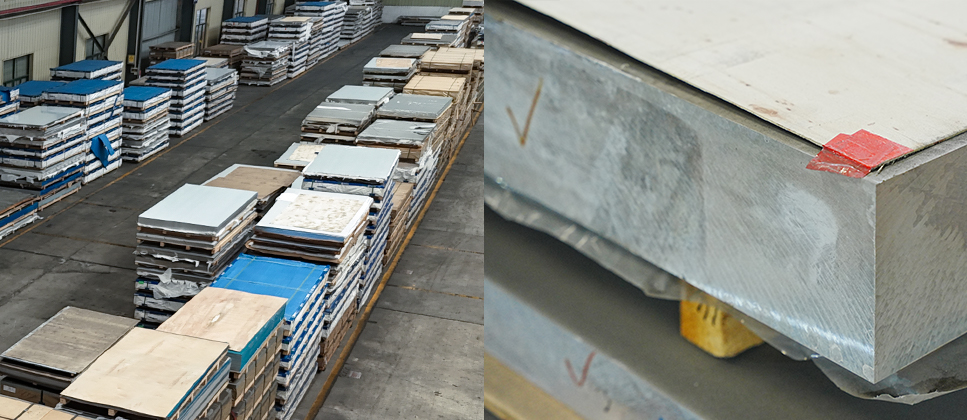
6063 aluminum sheet belongs to Al-Mg-Si aluminum alloy. It is known for its excellent extrusion performance, good surface treatment effect and moderate strength. It is known as the "king of architectural aluminum profiles" and is widely used in doors, windows, curtain walls, industrial frames and decoration fields.
National standard (GB/T): 6063 (corresponding to the old brand LD31).
American Standard (AMS): ASTM B221, ASTM B241.
European standard (EN): EN 573-3 (AlMg0.5Si).
ISO standard: AlMg0.5Si (ISO 209).
Main component range (mass percentage)
element | Content range (%) | effect |
Magnesium (Mg) | 0.45~0.9 | Forming Mg₂Si strengthening phase with Si |
Silicon (Si) | 0.2~0.6 | Improved extrudability and age hardening capabilities |
Iron (Fe) | ≤0.35 | Impurity Control |
Copper (Cu) | ≤0.10 | Avoid reducing corrosion resistance |
Manganese (Mn) | ≤0.10 | Impurity Control |
Chromium (Cr) | ≤0.10 | Improved corrosion resistance (optional addition) |
Zinc (Zn) | ≤0.10 | Impurity Control |
Features:
Low copper and low iron → Better corrosion resistance than 6061, suitable for outdoor use.
Optimized Mg/Si ratio → Good fluidity during extrusion and easy to form complex cross-sections.
state | Tensile strength (MPa) | Yield strength (MPa) | Elongation (%) | Hardness (HB) |
T5 (extrusion + artificial aging) | 160~215 | 110~150 | 8~12 | 60~80 |
T6 (solid solution + artificial aging) | 215~260 | 180~220 | 6~10 | 75~95 |
O (Annealed) | ≤90 | ≤50 | ≥20 | ≤25 |
Note:
The T5 state is directly aged after extrusion, with moderate strength and low cost.
The T6 state has higher strength, but requires additional solution treatment and is mostly used in high-demand scenarios.
Density: 2.69 g/cm³ (slightly lower than 6061).
Melting point: 615~655℃.
Thermal conductivity: 201 W/(m·K) (better than 6061, close to pure aluminum).
Electrical conductivity: 50% IACS (better than 5 series aluminum alloy).
Thermal expansion coefficient: 23.4×10⁻⁶/℃ (20~100℃).
advantage:
Excellent extrusion properties: complex thin-walled sections (such as door and window profiles) can be formed.
Good surface treatment effect: uniform color after anodizing, can be electrophoresed and sprayed.
Excellent corrosion resistance: especially suitable for outdoor humid and acid rain environments.
Good welding and cutting performance: The processing difficulty is lower than 6061.
shortcoming:
Low strength: The tensile strength is only 60%~70% of that of 6061-T6.
Cannot be used for high-load structures: For example, load-bearing beams must be made of 6061 or 7 series aluminum.
Construction field:
Door and window frames, curtain wall keels, and sun room profiles (accounting for more than 70% of global consumption).
Decorative lines, railings, and awnings.
Industrial Framework:
Equipment protection covers, assembly line brackets, and display cabinets.
Electronics and appliances:
Radiator housing, LED light trough (good thermal conductivity).
Traffic vehicles:
Subway/bus interior parts, luggage racks (lightweight non-load-bearing parts).
(1) Extrusion process
Temperature control: extrusion barrel temperature 380~450℃, mold temperature 450~500℃.
Speed: 5~50 m/min (adjusted according to the complexity of the section).
(2) Heat treatment
T5 process: air cooling or water cooling after extrusion, and then aging at 170~180℃ for 6~8 hours.
T6 process: solution treatment at 530℃ followed by water quenching, and then aging at 175℃ for 8 hours.
(3) Surface treatment
Processing | Effect | Applicable scenarios |
Anodizing | Forming 5~25μm oxide film | Building profiles (silver/colored) |
Electrophoretic coating | Strong weather resistance and various colors | High-end doors, windows and curtain walls |
Powder coating | Wear-resistant and UV-resistant | Outdoor decoration |
