
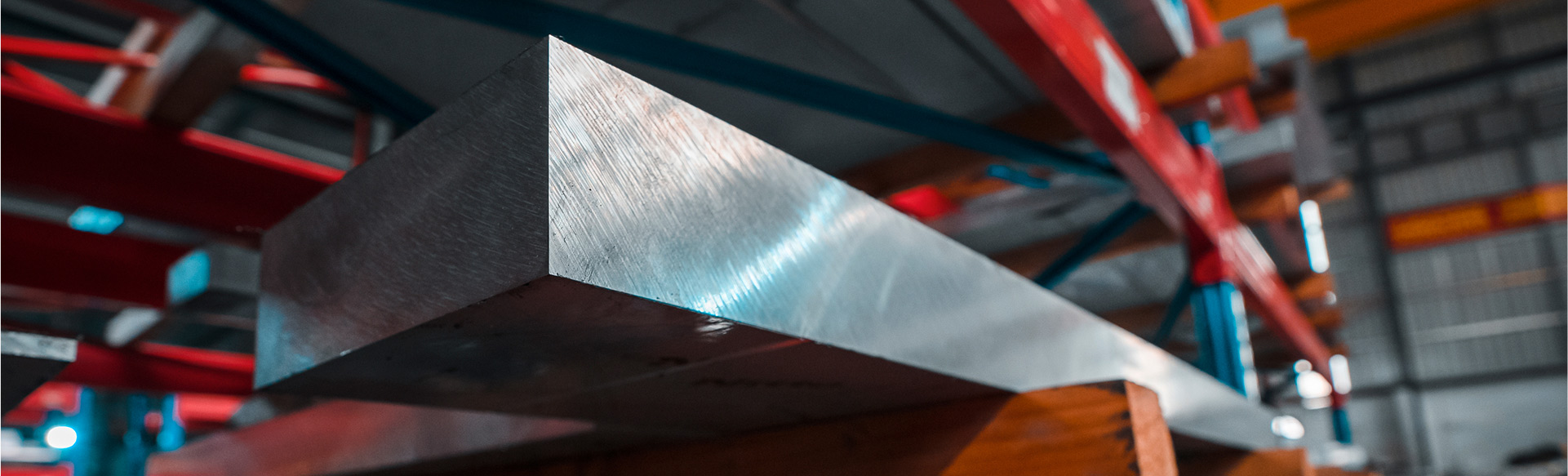
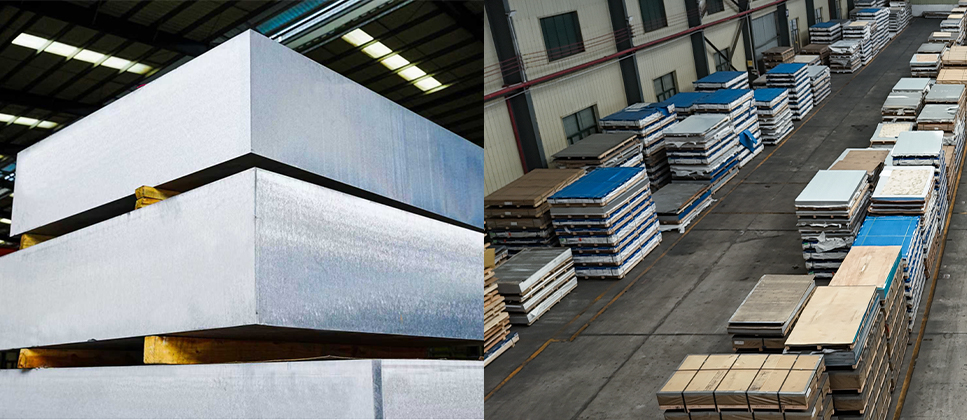
6061 aluminum plate belongs to the Al-Mg-Si series of heat-treatable and strengthened aluminum alloys. It has medium to high strength, excellent corrosion resistance, and outstanding processability. It is one of the most widely used aluminum alloys in the industrial field and is known as "universal aluminum".
National standard (GB/T): 6061 (old brand LD30).
American Standard (AMS): ASTM B209, ASTM B221.
European standard (EN): EN 573-3 (AlMg1SiCu).
ISO standard: AlMg1SiCu (ISO 209).
Main component range (mass percentage)
element | Content range (%) | effect |
Magnesium (Mg) | 0.8~1.2 | Forming Mg₂Si strengthening phase with Si |
Silicon (Si) | 0.4~0.8 | Improved strength and heat treatment response |
Copper (Cu) | 0.15~0.40 | Enhanced age hardening effect |
Chromium (Cr) | 0.04~0.35 | Inhibit intergranular corrosion and improve corrosion resistance |
Iron (Fe) | ≤0.7 | Impurity Control |
Manganese (Mn) | ≤0.15 | Impurity Control |
Zinc (Zn) | ≤0.25 | Impurity Control |
Features:
Mg₂Si phase: The strength is significantly improved by heat treatment.
Low copper (0.15~0.4%): balances strength and corrosion resistance.
state | Tensile strength (MPa) | Yield strength (MPa) | Elongation (%) | Hardness (HB) |
T4 (solid solution + natural aging) | 240~300 | 145~180 | 16~20 | 65~95 |
T6 (solid solution + artificial aging) | 310~370 | 275~310 | 10~15 | 95~120 |
O (Annealed) | 125~160 | 55~70 | 22~25 | 30~40 |
Features:
The strength of T6 state is close to that of mild steel (Q235), but it is light in weight (density 2.7 g/cm³).
Good low temperature toughness, suitable for -196℃~150℃ environment.
Density: 2.7 g/cm³ (similar to pure aluminum).
Melting point: 582~652℃.
Thermal conductivity: 167 W/(m·K) (better than 5052/5083).
Electrical conductivity: 43% IACS (higher than 5 series aluminum alloy).
Thermal expansion coefficient: 23.6×10⁻⁶/℃ (20~100℃).
advantage:
Balanced comprehensive performance: excellent strength, corrosion resistance and processability.
Heat treatable and strengthened: T6 state strength is more than 2 times higher than annealed state.
Wide processing adaptability: easy cutting, welding, anodizing.
Good corrosion resistance: better than 2A12 (2024), slightly lower than 5 series rust-proof aluminum.
shortcoming:
Re-heat treatment is required after welding: otherwise the strength of the heat affected zone will decrease by 30%~40%.
Use with caution in deep sea environments: long-term immersion in sea water may cause pitting corrosion (surface protection is required).
Aerospace: aircraft wing ribs, drone frames (T6 status).
Automotive industry: body structure, chassis components (lightweight alternative to steel).
Mechanical manufacturing: gears, hydraulic valve blocks, CNC machined parts.
Electronic appliances: heat sink, chip substrate (good thermal conductivity).
Architectural decoration: curtain wall keels, bridge guardrails (excellent weather resistance).
(1) Heat treatment process
Solution treatment: 530~550℃ holding and then water quenching (T4 state).
Artificial aging: keep warm at 160~180℃ for 8~18 hours (T6 state).
(2) Welding performance
Welding methods | applicability | Recommended welding wire | Precautions |
TIG welding | High precision thin plate | ER4043、ER5356 | Local heat treatment is required after welding |
MIG welding | Efficient welding of medium and thick plates | ER4043 | Preheat to 150°C to reduce crack risk |
Friction stir welding (FSW) | High-strength connection | No welding wire required | Suitable for key aerospace components |
Anodizing: Forming 5~25μm oxide film (can be colored, hardness HV800+).
Spraying/electrophoresis: Enhance appearance and weather resistance (such as automotive parts).
Chemical nickel plating: improves wear resistance and conductivity (electronics industry).
